Winged thick liner, piercings, funky coloured hair; alternative women have always been flattened into archetypes like ‘goth mommy’ and whatever else men have managed to come up with. This pipeline sexualising alt women has unfortunately ingrained itself deep into our society. Following this years Winter Olympics, the extent of online reactions has become increasingly apparent, with achievements being almost completely dropped for the sake of discussion around looks.
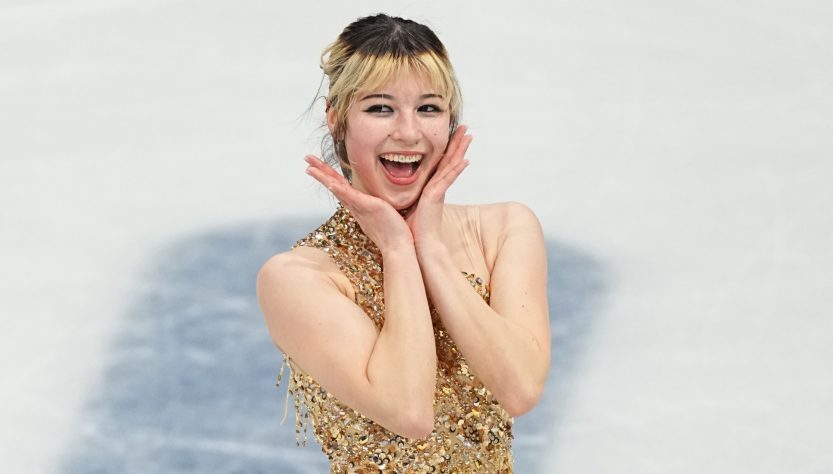
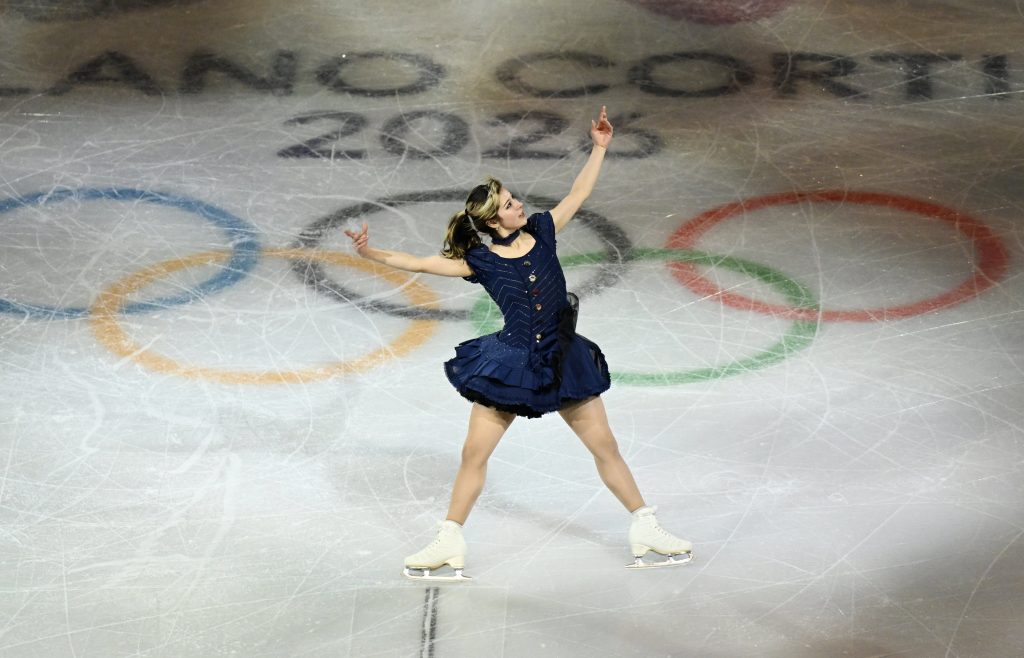
Gold winning Olympic figure skater, Alyssa Liu, has become the internet’s newest fixation in the best and worst way. She broke the 24-year drought in women’s figure skating (since America’s first gold medallist Sarah Hughes) and has now become a headline magnet far beyond the rink. Yet, alongside this rightful celebration of her achievement came a dog-whistle discourse.
A photo of Liu playfully sticking her tongue out with her gold medal was taken out of proportion and memefied as ‘goonbait’. If you’re not chronically online, goonbait is a “piece of media which contains copious amounts of sexual imagery, despite not being explicitly pornographic,” via Urban Dictionary. Women are being sexualised for simply existing because incels and porn addicts view them as “constantly sexually available”, according to a study by Alessia Tranchese (2021) from the University of Portsmouth.
Athletes are no strangers to aesthetics. Liu stands out by her rebellion towards the stereotypical figure skaters who flaunt bows and feathers, with her unapologetic halo streaks in her hair and up close her frenulum ‘smiley’ piercing. Individualism shouldn’t lead to sexualisation.
A 2021 graduate thesis study by Ella Coy explains how, as goth fashion and styling spread, symbols of self-expression become detached from meaning. This reduces complex identities (including women’s identities) into marketable, simplified and often sexualised tropes.
The ‘goth girlfriend’ meme or also misogynistically known as ‘big tiddy goth girlfriend’ originated from a website 4chan, where it featured a cartoon girl with pale skin, dark hair, large breasts and red eyes. The character is presented in a sexual nature, with pieces of dialogue such as “it’s cute when you try to dominate me” or “do I scare you?”.
These stereotypes are reflected in the real world, where Grimes, was labelled as Elon Musk’s ‘Goth Girlfriend’ after debuting at the 2018 Met Gala in a floor-length dark gown with big black combat boots and heavy dark makeup. This was not an invitation for fetishisation, however, once this becomes a part of commodified media, viewers outside of the subculture consume it without understanding its meaning, and as a result, increasing its misinterpretation and objectification.
The digital market strips alternative women’s femininity of meaning and sells it back as fantasy. OnlyFans has only fuelled the fire, by pornifying fishnets and chokers, reducing identity to trends that appeal to the male gaze. Pieces of clothing that were once used to express yourself are now marketed in hypersexualised ways, catering to a male audience rather than people they are truly intended for. Creators on OnlyFans use niche aesthetics as a way of promoting themselves, instilling the idea that every alt women is accessible and will act the stereotypical way. Creators who present alt amplify these issues. Understanding trends is important for their successes, therefore they milk men who are willing to pay pretty pennies for it.
Pornographic imagery increasingly shapes everyday representation, which explains why alternative women are especially vulnerable to being sexualised by others. The way we women express ourselves shouldn’t be drooled on because of the colour of our hair or the rips in our tights. Personal style has always meant identity, not an invitation to sexualisation.
